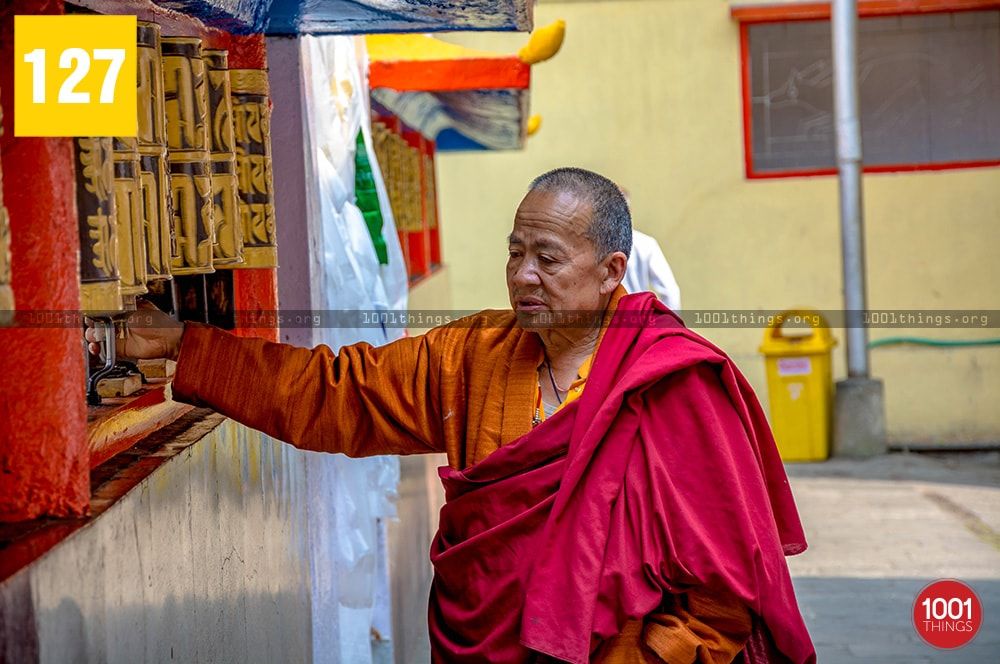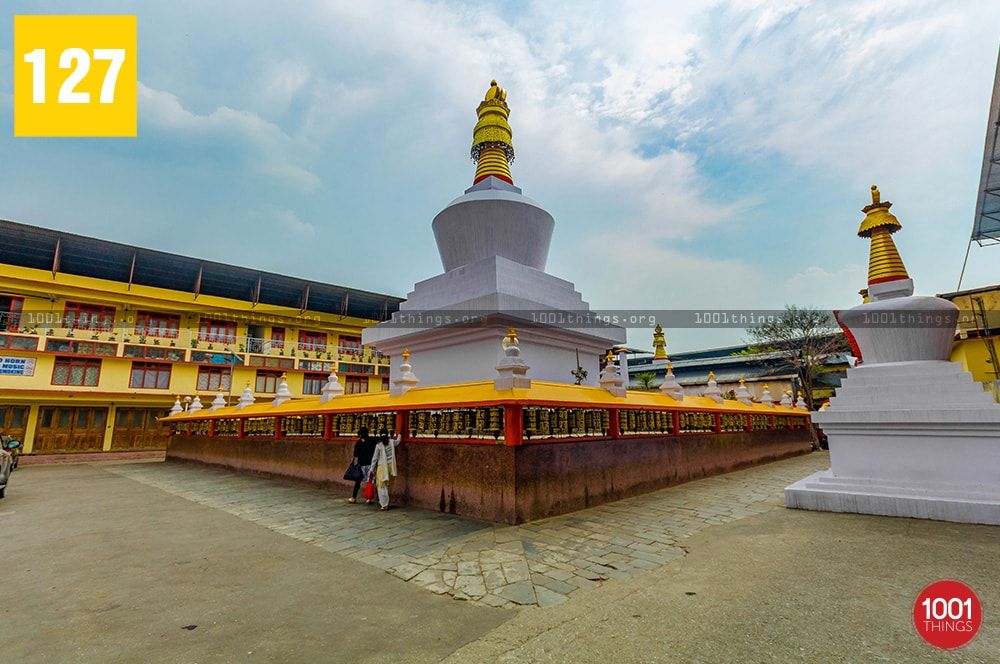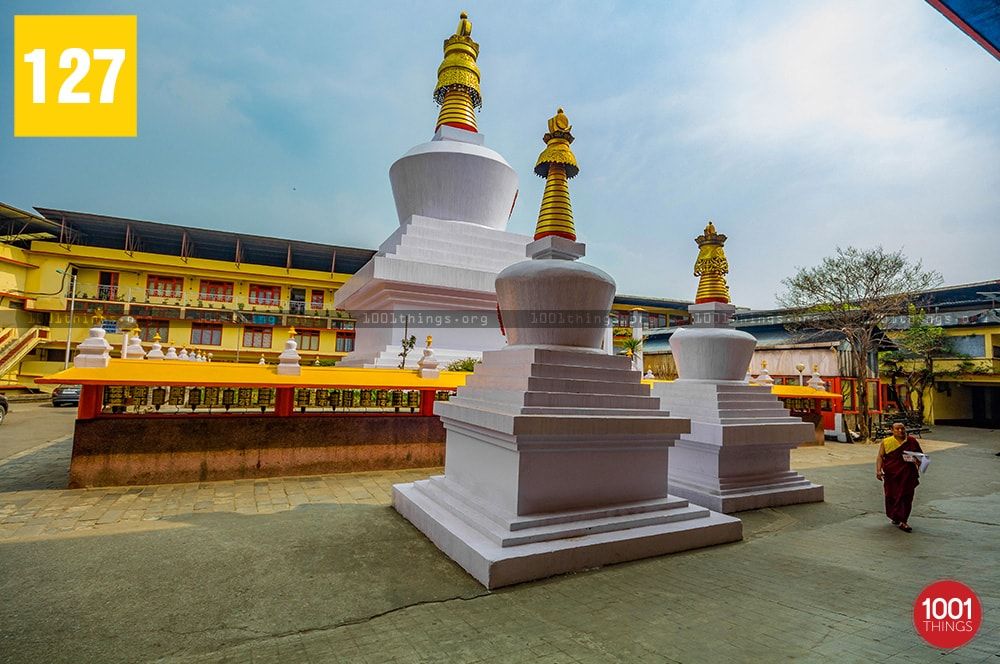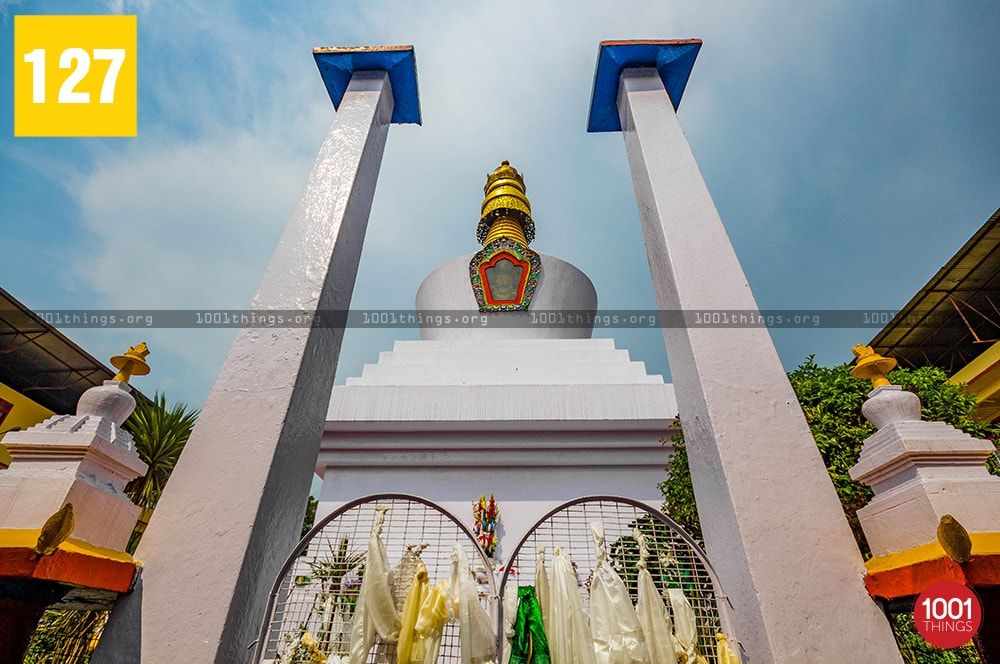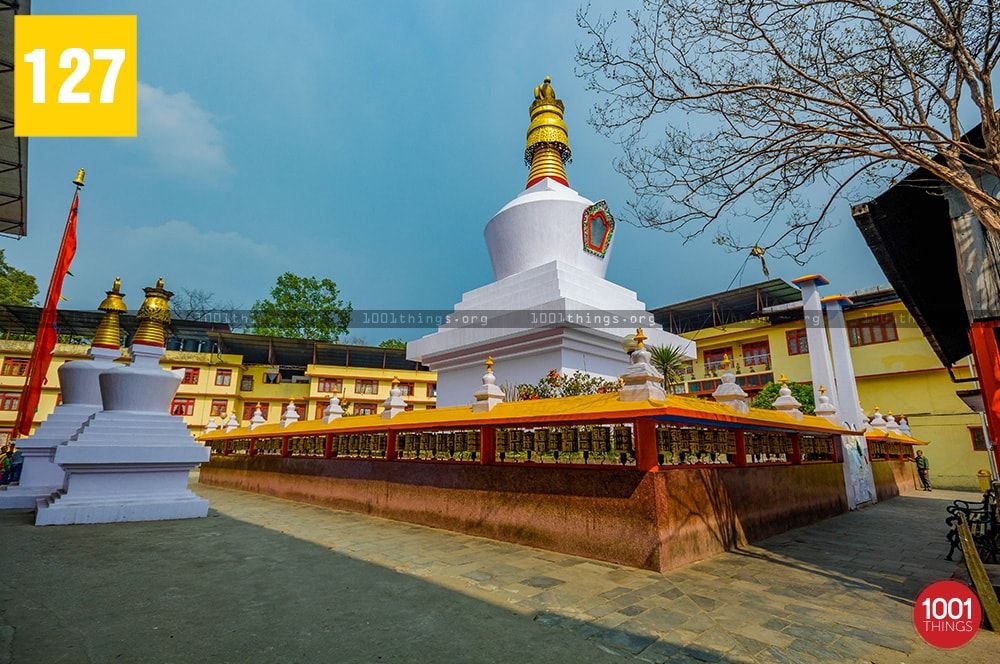
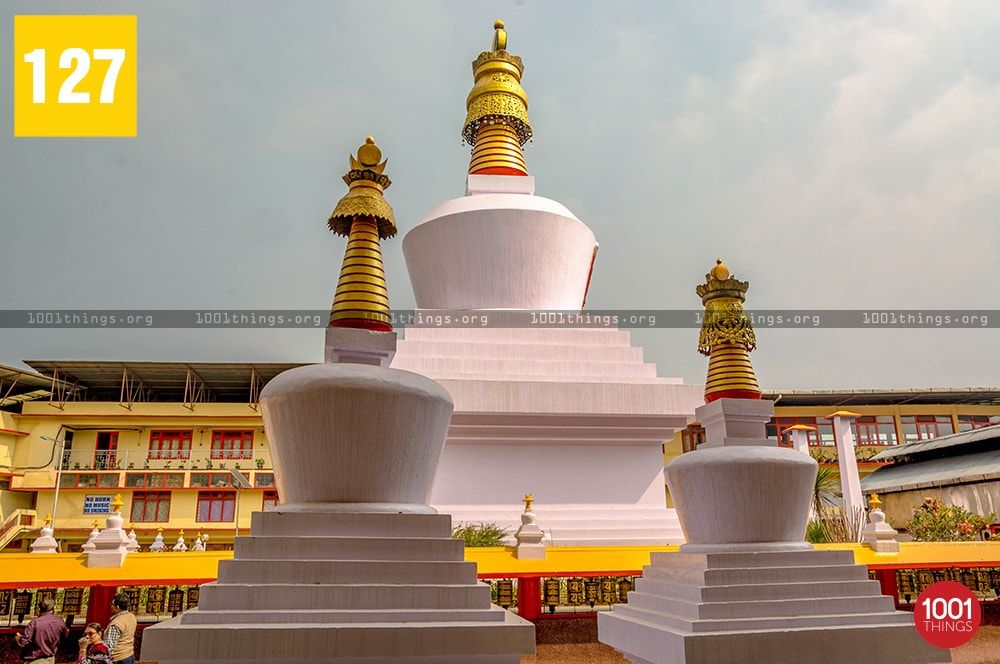
Dro-Drul Chorten is the most remarkable and architecturally significant Buddhist structure in Sikkim — the largest stupa in the state. Built by the venerable Trulshik Rinpoche, head of the Nyingma order of Tibetan Buddhism, in 1945, the Chorten was constructed to honour the wish of Dud-Zom Rinpoche expressed in 1944. It is said this stupa was built specifically to protect the Kingdom of Sikkim from invasion by neighbouring nations.
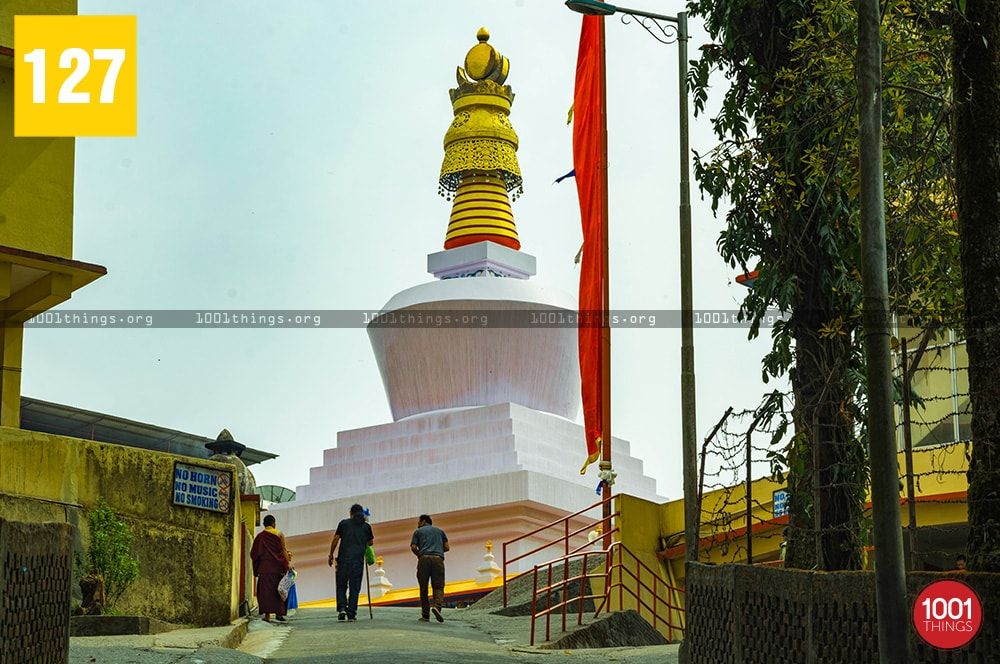
What is a Chorten (Buddhist Stupa)?
A Chorten, or Stupa, is a Buddhist monument traditionally housing sacred relics associated with the Buddha. The basic structure of a Chorten is rich in symbolism:
- A square foundation symbolising the earth
- A dome symbolising water
- Thirteen tapering steps of enlightenment symbolising fire
- A stylised parasol symbolising wind
- A twin-symbol of sun and moon at the crown, representing the ethereal sphere
This layered symbolism makes the Chorten not just a monument, but a complete cosmological statement in stone.